Faculty Q&A: Kristina Young
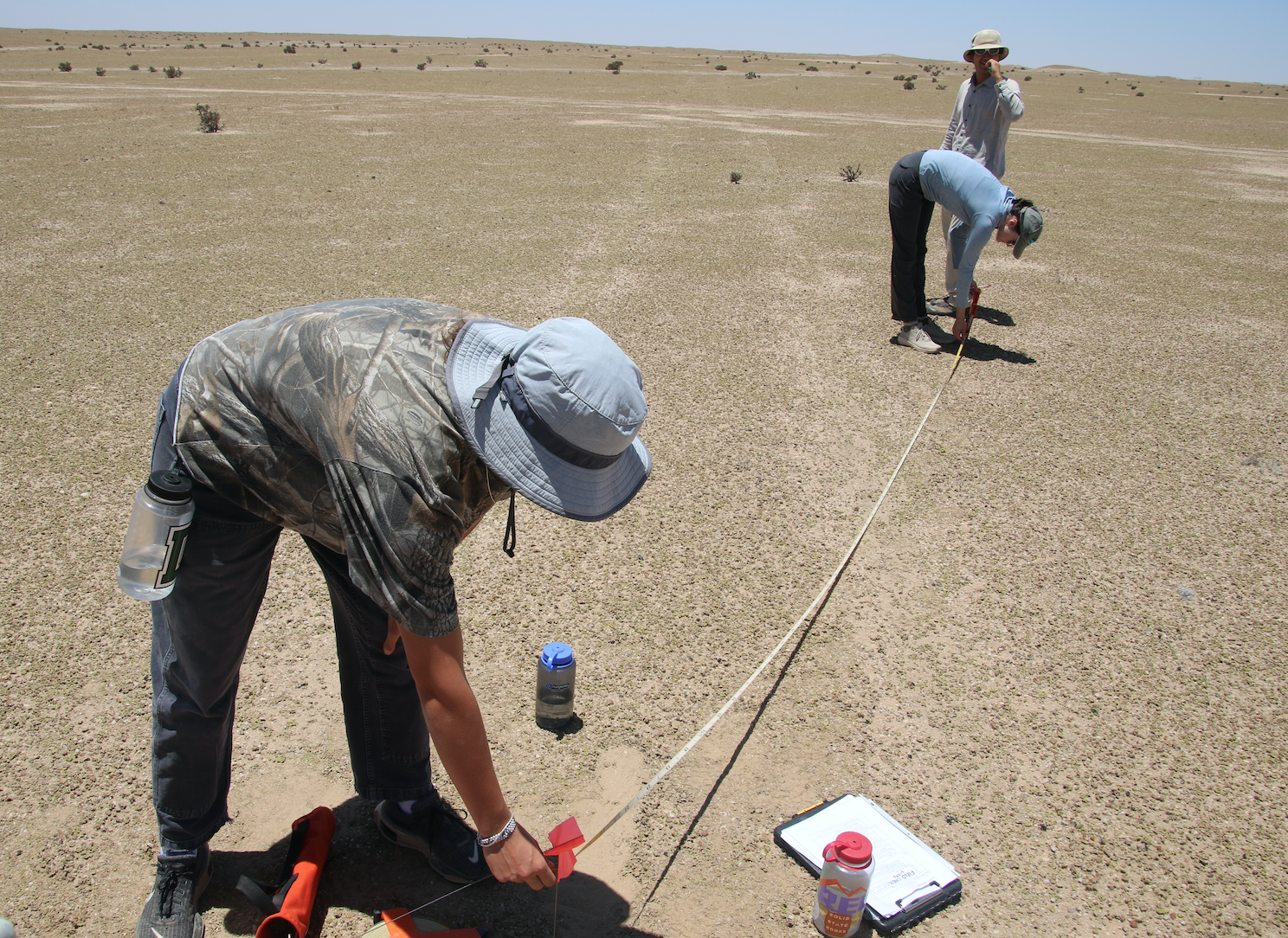
Kristina Young joined the UW–Madison faculty in January 2026 as an assistant professor of climate change ecology. As an ecologist, she studies how human land use reshapes ecosystems, with an eye toward sustainable land management and methods to halt and reverse land degradation.
Before joining the College of Letters & Science, she worked for the U.S. Department of Agriculture (USDA) Jornada Experimental Range as a postdoctoral research ecologist.
Her position is part of RISE-EARTH, the sustainability-themed University hiring effort.

What is your hometown? Where did you grow up?
I’ve lived all over! I spent most of my childhood in New Jersey, but have lived in Montana, Arizona, Utah, Colorado, Texas and New Mexico. My mom was born in Milwaukee, so it feels like coming back to my roots.
What is your field of research, and how did you get into it?
I’m a global change ecologist studying how climate change and human land use are reshaping ecosystems, especially deserts. Arid and semi-arid regions cover more than 40% of Earth’s land surface, but they’re often thought of as “unproductive” or as “wastelands.” I’m drawn to asking questions in these under-studied and often under-appreciated places.
What are the main goals of your current research?
My lab tackles ecological questions that can guide decision making. We work to improve predictions of ecosystem change as heat rises, precipitation shifts and pressure grows on land and water. Then we translate those insights into ways to prevent, or intentionally steer, undesired change. My work asks how these changes affect dryland plants but also the charismatic biological soil crusts (made up of mosses, algae, cyanobacteria, lichens and fungi) that grow on the soil surface in deserts.
How does your work address some of society’s greatest challenges?
Drylands are home to billions of people and play big roles in global carbon and nutrient cycles, but they’re highly vulnerable to change. When drylands degrade, communities can face large dust storms, reduced forage, less fertile soils and growing water and food insecurity. By identifying early warning signs and restoration options, I work to turn ecological insights into actionable guidance for land managers, communities and decision makers.
What attracted you to UW–Madison?
UW–Madison is the birthplace of modern restoration ecology. I was drawn to that legacy and to the faculty who elevate under-studied ecosystems and processes.
What’s your favorite place on campus so far?
The Lakeshore Path. After living in Southwest for the last 14 years, being surrounded by so much water feels like a gift.
What’s the most important lesson you hope students take from your classes and mentoring?
I want students to feel how energizing ecology can be. Learning how the world works can be extremely rewarding!
Do you feel your work relates to the Wisconsin Idea? If so, how?
Absolutely. The Wisconsin Idea is about turning University knowledge into public good. Deserts might seem far from Wisconsin, but what happens in those landscapes doesn’t stay there. When climate stress and disturbance loosen soils, dust storms can move across states and regions, which history saw happen during the 1930s Dust Bowl. Today, parts of the Southwest U.S. are seeing similar dust-storm activity. My research works to help anticipate ecological tipping points that lead to these dust storms and keep soils stable and ecosystems intact.
What’s something interesting or surprising about your area of expertise that will make us sound smarter at parties?
One of my favorites: Desert sand can fertilize the tropics! Wind-blown dust from places like the Sahara can cross an ocean and deliver nutrients (like phosphorus) that help sustain tropical ecosystems.
Do you have hobbies or interests outside of your work?
I love running and biking outside! I’m also a novice skydiver, much to my mom’s chagrin.