Botany MS and PhD
The Botany Graduate Program requires a combination of advanced coursework, seminar participation, and original research in botanical sciences at any level of organization: from molecules, to cells, organism lineages, to populations and communities.
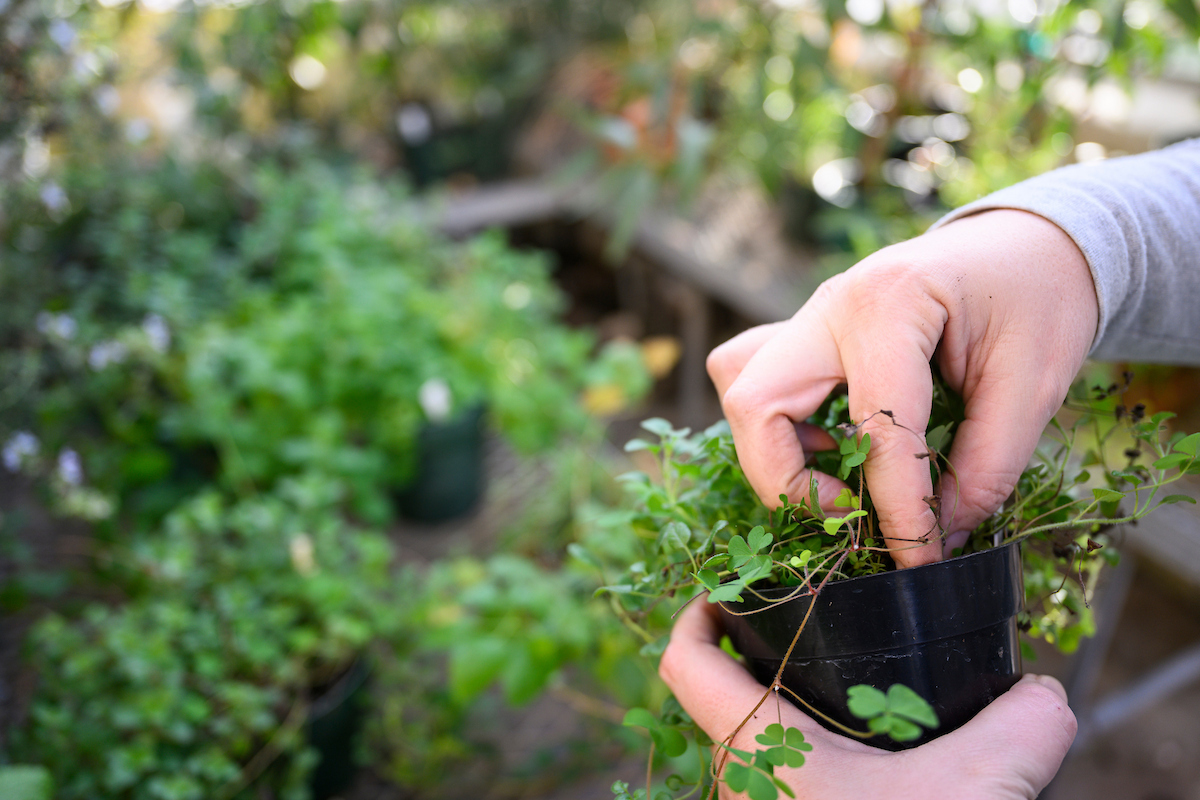
Graduate students begin their journey by selecting a track in botany to help focus their coursework and research interests. Track selection is made in consultation with a faculty member supervisor.
Working with our world class faculty, graduate students begin their independent research soon after arrival. Our students investigate plant biology through:
- molecular, cellular and developmental biology
- structural plant biology
- ecology
- evolution and systematics
Advanced instruction and research are also available in phycology, bryology, ethnobotany, paleoecology, restoration ecology, taxonomy, genetics, and physiology.
Projects can touch on more than one of these research areas. Interdisciplinary research across the department and university is encouraged.
Graduate students also have opportunities to access our living and preserved collections through the Botany Greenhouse and Gardens and The Wisconsin State Herbarium.
Advisor
Tracks
Each botany graduate students selects one of the following tracks:
MS students in this track must have one course from at least six of the seven below.
PhD students in this track must have one course from each of the seven below.
- genetics
- biochemistry, cell or molecular biology
- plant physiology or plant developmental biology
- cryptogamic botany
- plant anatomy or morphology
- ecology
- evolution or systematics
All graduate students in this track must have a minimum of 5 courses as follows:
- at least 3 courses (minimum of 9 credits) in ecology
- one course in evolution
- one course in any of the following:
- systematics
- cryptogamic botany
- biochemistry, cell or molecular biology
- plant physiology or plant developmental biology
- plant anatomy or morphology
- genetics
All graduate students in this track must have a minimum of 5 courses, at least one from each of the following:
- evolution
- systematics or cryptogamic botany
- population or quantitative genetics
- ecology
- one course in any of the following:
- biochemistry, cell or molecular biology
- plant physiology or plant developmental biology
- plant anatomy or morphology
All graduate students in this track must have a minimum of 5 courses, at least one from each of the following:
- plant anatomy or morphology
- biochemistry, cell or molecular biology
- plant physiology
- plant developmental biology or genetics
- one course in any of the following:
- ecology
- systematics
- evolution
- cryptogamic botany
Masters of Science (MS)
A general outline below covers information for completing the MS degree in Botany.
Normally, a MS degree is completed within 2.5 calendar years of residency.
Admission into graduate programs is based on the applicant’s:
- undergraduate record
- three letters of recommendation
- previous research experience and
- shared interests with one or more potential faculty advisors
- All entering graduate students meet with the departmental Academic Advisory Committee (AAC) at the beginning of the first semester, usually during orientation week.
- The AAC answers questions about the Botany graduate programs and advises the student on
- meeting general course requirements
- making up deficiencies
- formulating a program that will lead to an advanced degree in the time allotted
- Students select a major professor, vice major professor and MS committee within the first year of graduate studies. The MS Committee consists of at least 3 Botany Faculty.
- The major professor is primarily responsible for
- directing the student’s coursework,
- supervising the student’s research and preparation of their thesis,
- chairing the MS committee,
- monitoring the student’s satisfactory academic progress toward a degree.
- The vice major professor assumes the major professor’s duties when the major professor is unavailable.
- The major professor is primarily responsible for
- Course requirements depend on which of the four tracks in Botany the student selects (see above).
- Students select a track as soon as possible but no later than their Certification Meeting at the end of their first year of study.
- The Academic Advisory Committee or the MS Committee will advise the student on available courses that could fill track requirements.
- Students meet with their MS Committee by the end of their first year of study to determine what additional courses will be required or recommended, in addition to the major requirements (e.g., courses for the student’s selected track, seminar courses, and minimum Botany credits).
MS students complete a minimum of 16 credits while in residence at the UW, including:
- Courses required for their selected track
- Six (6) credits within the Botany Department (can also fulfill track requirements)
- Two (2) seminar courses
- Courses assigned by the Academic Advisory Committee and/or the student’s MS Committee
- Research credits
See the UW Graduate School website for minimum credit and grade requirements
If you plan to later pursue a PhD:
Students complete a non-terminal MS degree if they plan to pursue a PhD at the University of Wisconsin – Madison. There are two options for completing a non-terminal MS degree:
- Thesis
- This option requires a written thesis based on original research. The thesis is reviewed and approved by the student’s MS Committee and deposited in the UW Memorial Library.
- Research Report
- Research reports are not deposited in the UW Memorial Library. Students may select this option for a number of reasons. For example, research results may be potentially patentable, and therefore, cannot be published in a library thesis which would invalidate the patent application.
If you plant to only earn a MS:
Students who expect to conclude their graduate studies at the University of Wisconsin—Madison with a MS degree have three options:
- Thesis (same as above)
- Research Report (same as above)
- Written Literature Review
- This option requires a written literature review approved by the student’s major professor, plus six additional graduate-level credits while in residence at UW-Madison. Candidates who submit a written literature review normally will not be admitted to the Botany PhD program at the University of Wisconsin—Madison.
The Non-thesis Professional Degree in Ecological Restoration is designed to prepare Botany students for careers in environmental consulting, natural resource agencies, and nongovernmental organizations.
This professional MS degree program is based on tailored coursework and skills training and requires a written literature review discussing the practical and biological aspects of a restoration practice. It is intended for students who wish to conclude their graduate studies with a Master’s degree.
Students participate in a summer practicum that involves 4 skill modules from the following:
- Plant Identification
- Surveying
- Wetland Delineations
- Monitoring and Assessment
- Use of chainsaws, herbicides, and prescribed burn techniques
- Environmental Planning
- Environmental Regulations
- Use of Global Positioning System
- Use of Geographic Information Systems
- Facilitating meetings to plan restorations
Students enrolled in this program are not eligible for teaching or project assistantships.
For more information or to apply to this program, contact Professor Kate McCulloh at kmcculloh@wisc.edu
MS candidates who submit a thesis or research report must pass a final oral examination administered by the student’s MS committee.
The committee bases the final oral exam on the student’s thesis or research report and will test the student’s ability to:
- analyze biological problems and formulate effective research approaches
- integrate and apply knowledge from a variety of fields related to their research
- respond articulately to questions regarding their research and related fields
- demonstrate knowledge of recent advances and exhibit perspective on the history and philosophy of scientific investigation in their field
Doctoral of Philosophy (PhD)
A general outline below covers information of completing a PhD in Botany.
Normally, a PhD degree in Botany is completed within 5 calendar years of residency (four years if the student enters with a Master’s degree.)
Admission into graduate programs is based on the applicant’s:
- undergraduate record
- three letters of recommendation
- previous research experience and
- shared interests with one or more potential faculty advisors
- All entering graduate students meet with the departmental Academic Advisory Committee (AAC) at the beginning of the first semester, usually during orientation week.
- The AAC answers questions about the Botany graduate programs and advises the student on
- meeting general course requirements
- making up deficiencies
- formulating a program that will lead to an advanced degree in the time allotted
- Students select a major professor, vice major professor and PhD committee within the first year of graduate studies. The PhD Committee consists of at least 5 members: at least 3 Botany Faculty and at least 1 UW Graduate Faculty beyond.
- The major professor is primarily responsible for
- directing the student’s coursework
- supervising the student’s research and preparation of their thesis
- chairing the PhD committee
- monitoring the student’s satisfactory academic progress toward a degree.
- The vice major professor assumes the major professor’s duties when the major professor is unavailable.
- The major professor is primarily responsible for
- Course requirements depend on which of the four tracks in Botany the student selects (see above).
- Students select a track as soon as possible but no later than their Certification Meeting at the end of their first year of study.
- The Academic Advisory Committee or the PhD Committee will advise the student on available courses that could fill track requirements.
- Students select a minor field of study prior to the Certification Meeting at the end of the first year of study and no later than half-way through their minor coursework.
- In all cases, the minor plan must be developed and approved in consultation with the student’s major professor, minor professor (if applicable), and PhD committee.
- Minor options for PhD students in the Botany Program are:
- Option A:
- The student takes courses in a single department/major field of study or to complete a graduate certificate program.
- This option requires the approval of the minor department or the graduate certificate program and the selection of a minor professor who serves on the student’s PhD committee.
- Option B:
- The student takes courses associated with a particular focus from one or more departments.
- This option requires the approval of the student’s PhD Committee and Botany Department Chair.
- Option A:
- By the end of their first year of study, students meet with their PhD Committee to determine if additional courses will be required or recommended for their major and for approval of their minor field of study.
- PhD students complete a minimum of 32 credits while in residence at the UW prior to earning dissertator status. These credits complete the following requirements:
- Courses required for their selected track
- Six (6) credits within the Botany Department (can also fulfill track requirements)
- Two (2) seminar courses, including one outside the student’s track and/or outside Botany
- Courses for the student’s Minor Field of Study
- Courses assigned by the Academic Advisory Committee and/or the student’s PhD committee
- See the UW Graduate School website for minimum credit and grade requirements.
- At least one semester of classroom teaching experience is required of all PhD students while in residence at UW-Madison.
- Prior teaching experience and grader positions do not count.
- Additional teaching experience is highly recommended.
- Students must meet at least once a year with at least 3 members of their PhD committee to
- report progress
- receive advice and guidance
- discuss possible new directions or approaches
- be certified as making adequate progress toward the PhD degree
- A written research proposal is reviewed and approved by the student’s PhD committee.
- The proposal includes:
- a project summary
- a clear statement of questions and hypotheses to be addressed
- methods and approaches to be used
- the significance of the results expected
- their relationship to ongoing research in the field
- The preliminary oral exam follows a presentation of the proposed research by the student.
- The preliminary exam is administered by at least 5 members of the student’s PhD committee, including the major and, if applicable, minor professors.
- The committee will explore the appropriateness of the proposed research topic and approach, with the objectives of evaluating the student’s ability to propose a rigorous and significant research plan and providing advice for improving the research plan.
- A student is officially admitted to candidacy for the PhD at the start of the semester or summer following completion of all DISSERTATOR requirements (except for the dissertation and final exam.)
- To be eligible for dissertator status, a student must have:
- passed the preliminary examination in the major field,
- satisfied the Graduate School’s 32 credit requirement, and
- completed all major and minor coursework requirements.
After the achieving dissertator status, each candidate for the PhD degree gives an annual public presentation of their research progress on campus.
A written dissertation based on original research is required. The dissertation is reviewed and approved by the student’s PhD Committee during the final oral exam and deposited with the UW Graduate School.
- During the final semester in residence, a candidate for the PhD degree presents a departmental seminar on their research.
- This seminar is treated as a Botany Colloquium with a public announcement distributed to Botany faculty, staff and graduate students, and any other interested parties at least one week prior to the seminar.
- All candidates must pass a final oral examination administered by the student’s PhD committee. The committee bases the final oral exam on the student’s dissertation and will test the student’s ability to:
- analyze biological problems and formulate effective research approaches
- integrate and apply knowledge from a variety of fields related to their research
- respond articulately to questions regarding their research and related field
- demonstrate knowledge of recent advances and exhibit perspective on the history and philosophy of scientific investigation in their field
Forms
Necessary forms for the Botany Graduate Program are available at the link below.