Faculty Q&A: Daniel Spalink uses systematics and collections to study global plant biodiversity
Daniel Spalink is a plant systematist and biogeographer. He integrates genetics with data on plant occurrences from global databases and herbaria around the world to improve our understanding of biodiversity.

Spalink completed his PhD in the UW–Madison Botany Graduate Program in 2015 and jumped at the opportunity to return to campus as an assistant professor. We sat down to learn more about his work and the strong history of botanical sciences that brought him back to campus.
What’s your hometown?
I was born in Tokyo and lived there off and on through high school. I also have family in Michigan and ended up going to school there for my undergrad.
Can you describe your field of research?
I’m a systematist, so I study how plants are related to each other. Ultimately, my work comes down to understanding the extent and distribution of plant biodiversity on Earth.
It’s about tracking the movement of plant lineages through time and across space as they’re simultaneously diversifying, going extinct, or forming and dissolving communities. Knowing how many species and lineages exist, where they are found now, and where they come from historically can help us understand the status and resilience of various ecosystems.
What does your research look like?
We use big data sets, modeling on computers, fieldwork for specimen collection, and work in the lab to sequence DNA. We get data from all kinds of global occurrence records about soil, fire, water, and especially records from herbaria.
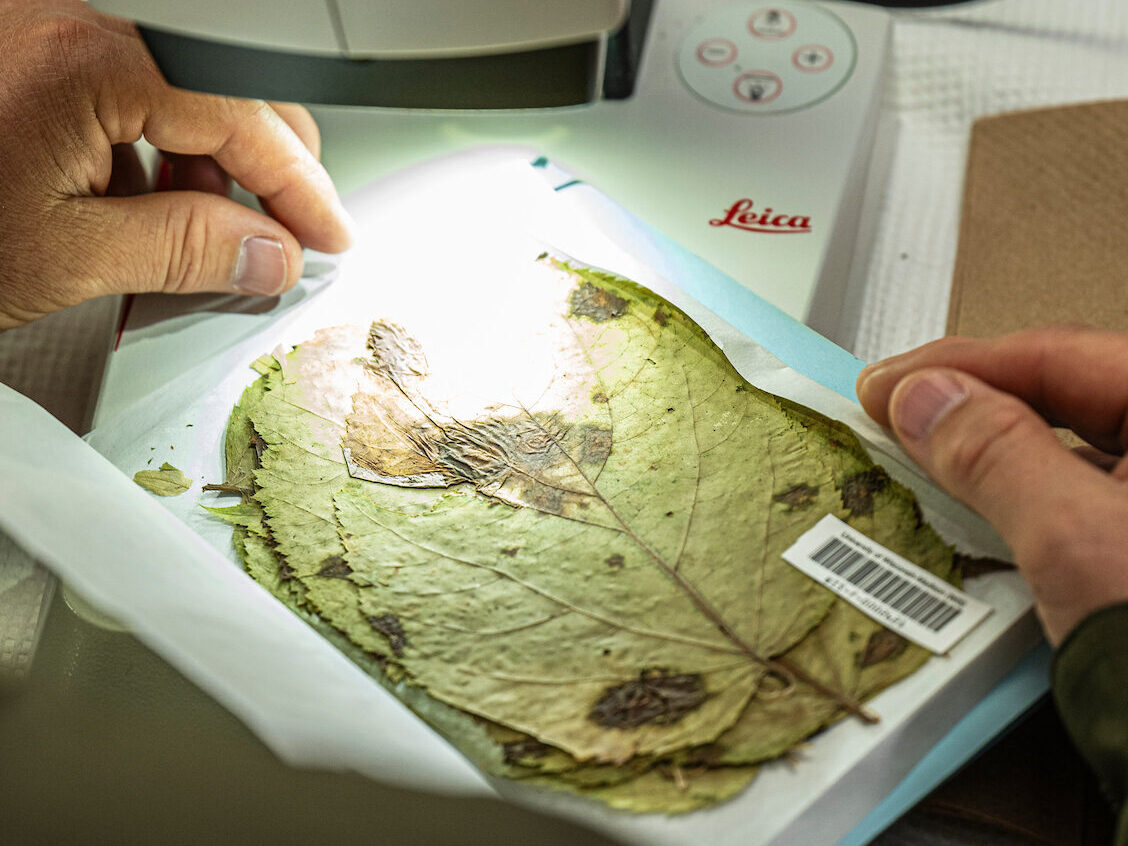
Collections like the Wisconsin State Herbarium are super foundational to so much research, and especially for everything I do. The people working here and the volunteers have made the herbarium a tremendous resource. I try to expand these resources’ utility by extracting new layers of data from them with modern techniques.
Historically, the specimens were collected for taxonomy and floristics, and to keep track of where the species was found, right? But now we can sequence genomes from them and extract all sorts of traits from them.
How do you think your work connects to the Wisconsin Idea?
I’m trying to understand how ecosystems form and where the lineages came from to create a baseline of information. With that baseline, we have a much better sense of the status of species, but also the rarity, fragility or resilience of specific ecosystems and habitats.
So, for the Wisconsin Idea, understanding the condition of our state helps us know where we need to focus our efforts to protect what’s most at risk, or even to prioritize the lineages or the areas that are most at risk for the long term.
You’re also an alumnus, what made you want to return to Madison?
There’s no place on Earth like it, at least historically for the botanical sciences. The resources here for botany are so deep and so expansive, and available at our fingertips. And there’s incredible staff working in all these resources too.
I’ve been to several universities now, and there’s nothing like it.
What’s something surprising about your work?
I mentioned I work with a lot of collections, and I think it’s so interesting what we can do with a specimen that was collected over 100 years ago.
For example, I’ve been experimenting with a technique called hyperspectral imaging. Basically, you scan a leaf, and there’s the visible light that you see, but then there’s also the ultraviolet and the infrared. These machines can extract all the information of what’s being reflected outside of the visible light spectrum.
So, in theory, you could be able to link things like photosynthetic pathway, carbon and nitrogen content of the leaves, all these different traits of the leaves themselves from when they were alive in their specific geographic ecological situation, just by what light they reflect. Some of that data would be really expensive and tedious to extract from the specimens otherwise and could even destroy the tissue samples.
What do you hope students take away from your courses or mentorship?
I’m setting up my lab and not teaching here yet, but in the past, I’ve taught a lot of plant biodiversity courses, where not everyone there is taking the class because they’re excited about plants. So, I made that part of my mission: to get students excited about botany.
There is already a lot of excitement for botany on this campus, so I’m eager to continue cultivating that. I want to have students be curious and to leave with skills that they need to be successful in their careers, whatever that may be.