Considering land’s potential to improve mitigation of degradation, wind erosion, sand and dust storms
By: Elise Mahon
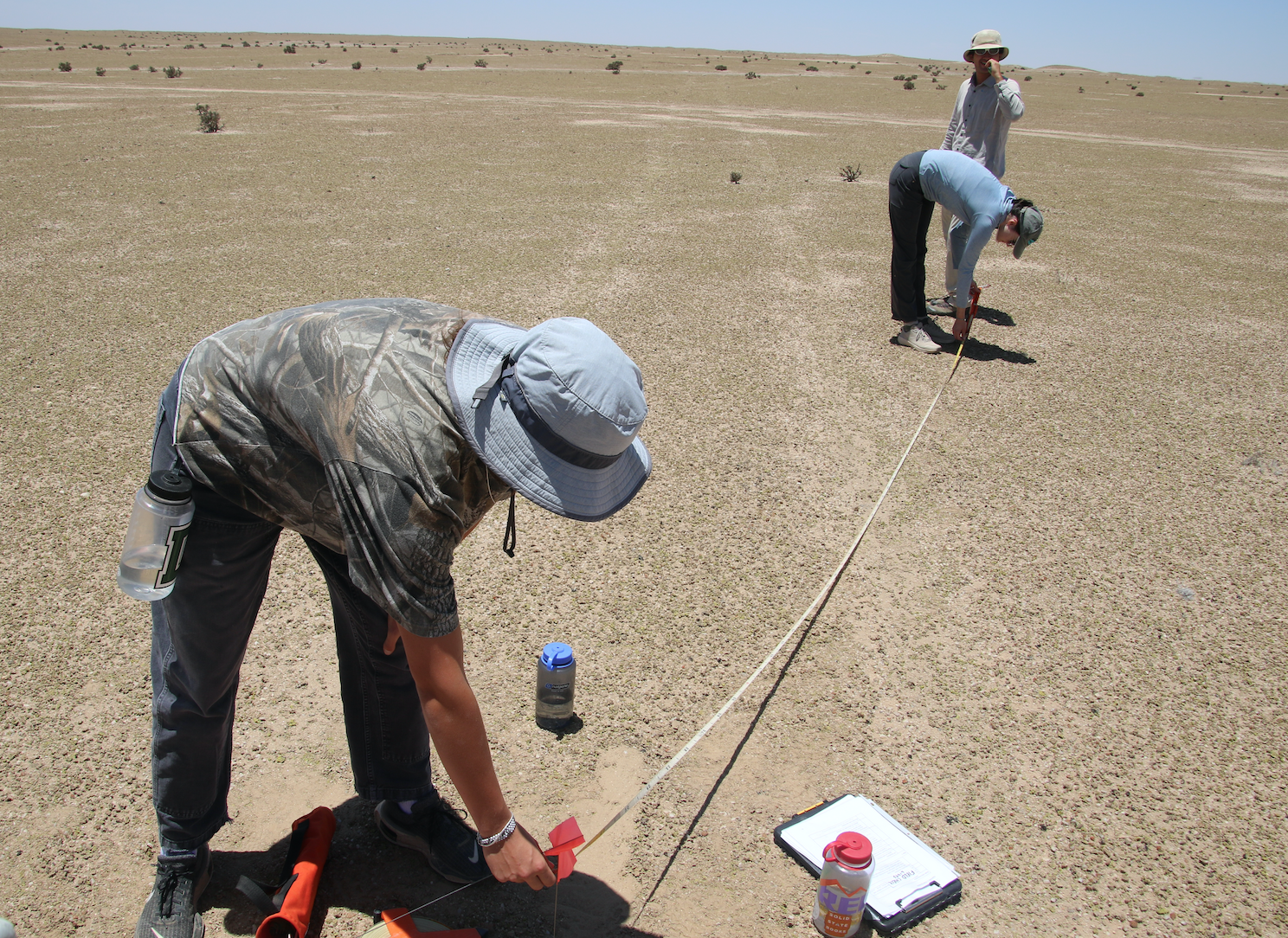
A new approach to mitigate harmful wind erosion, sand and dust storms uses land potential to better match land management practices with the needs of a particular area. The paper was recently published in Land Degradation and Development by UW–Madison assistant professor Kristina Young.
Drylands cover over 40% of the Earth’s surface and can influence ecosystems around the world. Sand and dust storms are natural occurrences in some drylands, like in the Sahara where they can move vital nutrients across oceans to fertilize land in the tropics. But in places where sand and dust storms are not a natural occurrence, they are usually caused by land degradation. Land can degrade for a number of reasons including changes in climate, unsustainable agriculture, and land development that disrupts soil integrity and vegetation.
Sand and dust storms affect millions of people around the world, causing immense damage to infrastructure and health. To help address this issue of land degradation, the United Nations’ Convention to Combat Desertification designated 2025-2034 the Decade on Combating Sand and Dust Storms. The UN Convention has gathered numerous resources on land management and dust-source mitigation techniques to aid in the effort.

But drylands are not homogenous. The soil, geomorphology, climate, surrounding landscapes, all shape land’s potential — or, its inherent capacity to support vegetation, soil stability, and productivity. Young, an ecosystem ecologist who specializes in drylands, believes the practices used to manage land should match their uniqueness.
“The reasons that one area of land might be eroding and degrading are going to be different from another area of land,” says Young. “Without a fundamental understanding of an area of land, we can misapply restoration and land management techniques that are just not well suited to the specifics of that area.”
To help bridge this gap between resources and application, Young and her collaborators created a six step framework to guide land managers on what practices to use when. The first three steps focus on building an understanding of the land’s potential and additional context such as its use for, or proximity to, agriculture, and identifying its current exposure to wind erosion.
Land managers can then use this context to determine reasonable mitigation goals, identify appropriate techniques to reach them, and make a plan to monitor outcomes and adapt management practices as needed.
Young says that while the steps of the framework are not novel, focusing them around wind erosion and land potential is.
“We’re trying to reconnect this issue of dust and wind erosion to land, to literally and figuratively ground it for people to address where it’s coming from, instead of trying to address it once it’s in the atmosphere,” Young says.
Land will continue to be used, regardless of changes to climate. But Young believes sustainable land management relies on understanding the capacity of land to support different types of management actions and staying well within that boundary.
“Really it’s about ensuring that we can avoid changes, reduce the likelihood of changes happening, reverse changes that are already occurring, or we can accept that there’s erosion happening and mitigate the downwind effects,” Young says.
Young will continue to work with the UN Convention to Combat Desertification, using the principles outlined in this paper to co-author a rapid assessment report that will help inform future investment in land degradation mitigation.
This work was supported by the US Department of Agricultural, Natural Resources Conservation Service, Conservation Effects Assessment Project-Grazing Lands (60-3050-1-003).