Making research less daunting: Bio 152 prepared undergraduate for prestigious research fellowship
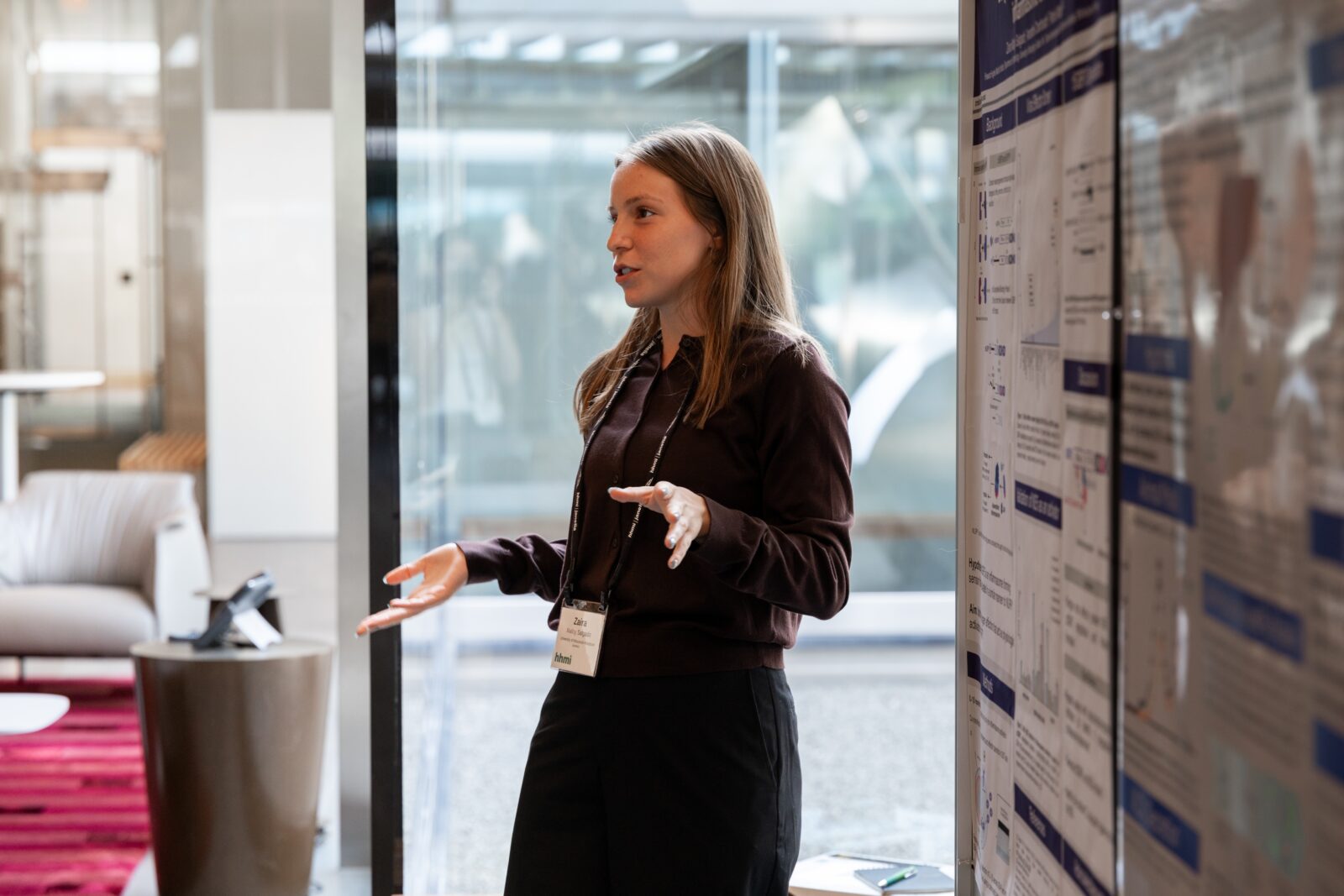
Zaira Malloy-Salgado, a senior majoring in Molecular and Cell Biology, spent the summer as an inaugural HHMI Cech Fellow. The program matches students with HHMI scientists conducting fundamental research to advance our understanding of biology and health.
Over the course of nine weeks, Malloy-Salgado worked a full time research position in an immunology lab at the University of Washington, getting hands-on experience and learning from her fellow cohort members across the country.
We sat down with Malloy-Salgado to learn more about her experience in the fellowship and how her time at UW–Madison prepared her for the opportunity.
How did you get involved with research?
I got into research my sophomore year because of Biology 152. I’d always been interested in the idea of doing research, but I found it really intimidating and kind of daunting.
The course has an independent project which ends in a research paper and a poster presentation at the end of the semester, and you have the support of a student mentor throughout the process.
Students are encouraged to reach out to professors to join their labs, and that’s what I did. I asked Professor Joe Dillard about opportunities in his bacterial pathogenesis lab and have been working there ever since.
What parts of Bio 152 helped you feel prepared to jump into research?
The class does a really good job of structuring and providing timestamps of when things should be getting done. It also teaches students how to communicate and write about science.
Getting a taste of that process in a class environment where you’re getting a lot of feedback and support is really helpful. It prepares students who are interested in research and pursuing it further, by giving them experience in things that are required to do a PhD, get a master’s, or do research in a lab in general.
What are you researching in the Dillard lab?
I’m researching various mechanisms of pathogenesis of Gardnerella vaginalis, a bacteria that plays a significant role in the development of bacterial vaginosis. A lot of those details aren’t well known or defined, despite BV affecting around 25% of women worldwide.
One of my projects aims to better understand how the bacteria adheres to human cervix tissue, a mechanism that is important for the infection to initiate and persist. I’m also working on creating a non-virulent Gardnerella strain by introducing mutations to the bacteria that prevent it from causing infection, while still eliciting an immune response. Both of these projects are related to identifying and understanding the factors that are crucial for infection and development of BV.
How did those experiences differ from your work during the Cech Fellowship?
I was doing immunology work in Professor Patrick Mitchell’s lab at the University of Washington. I’ve actually never even taken an immunology class before so I was pretty inexperienced, but that’s what I was hoping for because a big question I had while doing research was “How do people know what type of science they want to do?”
In the Mitchell Lab, I learned about immune system diversification, which is strongly selected for by continuous host and pathogen interactions. My project was focused on a mechanism of diversification known as protein domain rearrangement, where subunits of proteins shuffle to gain new functions. I was examining a zebrafish antimicrobial protein that gained immune sensor functions through domain rearrangement. I worked on identifying if this rearrangement event created a novel and functional immune sensor that combined the protein’s antimicrobial functions with inflammatory response signaling.
What was your favorite part of the fellowship?
Being completely immersed in a lab of really talented and hardworking scientists provided the perfect environment for growth and learning to help me become a better scientist. I had the opportunity to work under a supportive and skilled PhD student who made an effort to ensure I genuinely learned and understood the scientific reasoning behind each step of the project.
The Cech Fellow Symposium at the end of the summer was at HHMI’s Janelia Research Campus. Being there, getting to hear a presentation from Thomas Cech, and seeing the poster presentations and great science done by all the other fellows was really exciting to see.
What have you learned about your own research goals from these experiences?
I gained an appreciation for fundamental biology research, it is so important. But I think the experience helped me realize that I feel most fulfilled doing research that’s more translational and has a direct application. I’m really motivated to understand and help solve issues that are affecting people’s lives.
What advice would you give to new Molecular and Cell Biology majors?
Get involved in research!
I think being in a lab is a fulfilling experience to really get hands-on with the things you’re learning in class. Personally, I’ve learned the most about science in the lab. That’s where it really comes to life, and the information from all my classes really seeps in and makes the most sense to me.